

Introduction
When readers search for twastia com authors, they are usually looking for more than a list of names. They want to understand who creates the content, what subjects those writers cover, and whether the information published on Twastia is useful and trustworthy.
Author transparency matters because a byline gives readers important context. It can help them understand whether an article is written from a specialist perspective, produced by a broader editorial team, or contributed by an outside writer. It is especially relevant when content covers areas such as health, finance, technology, business, home improvement, or other subjects where expertise and accuracy matter.
Twastia is a broad publishing platform with articles covering topics ranging from technology and business to health, home improvement, and professional services. Its current website displays individual bylines on published articles, while older content visible through the site also shows different contributors.
This guide explains what readers should know about Twastia com authors, how author information can be evaluated, what kinds of subjects Twastia writers cover, and how to assess an article before relying on it.
Key Takeaways
- Twastia com authors refers to the writers and contributors associated with content published on Twastia.
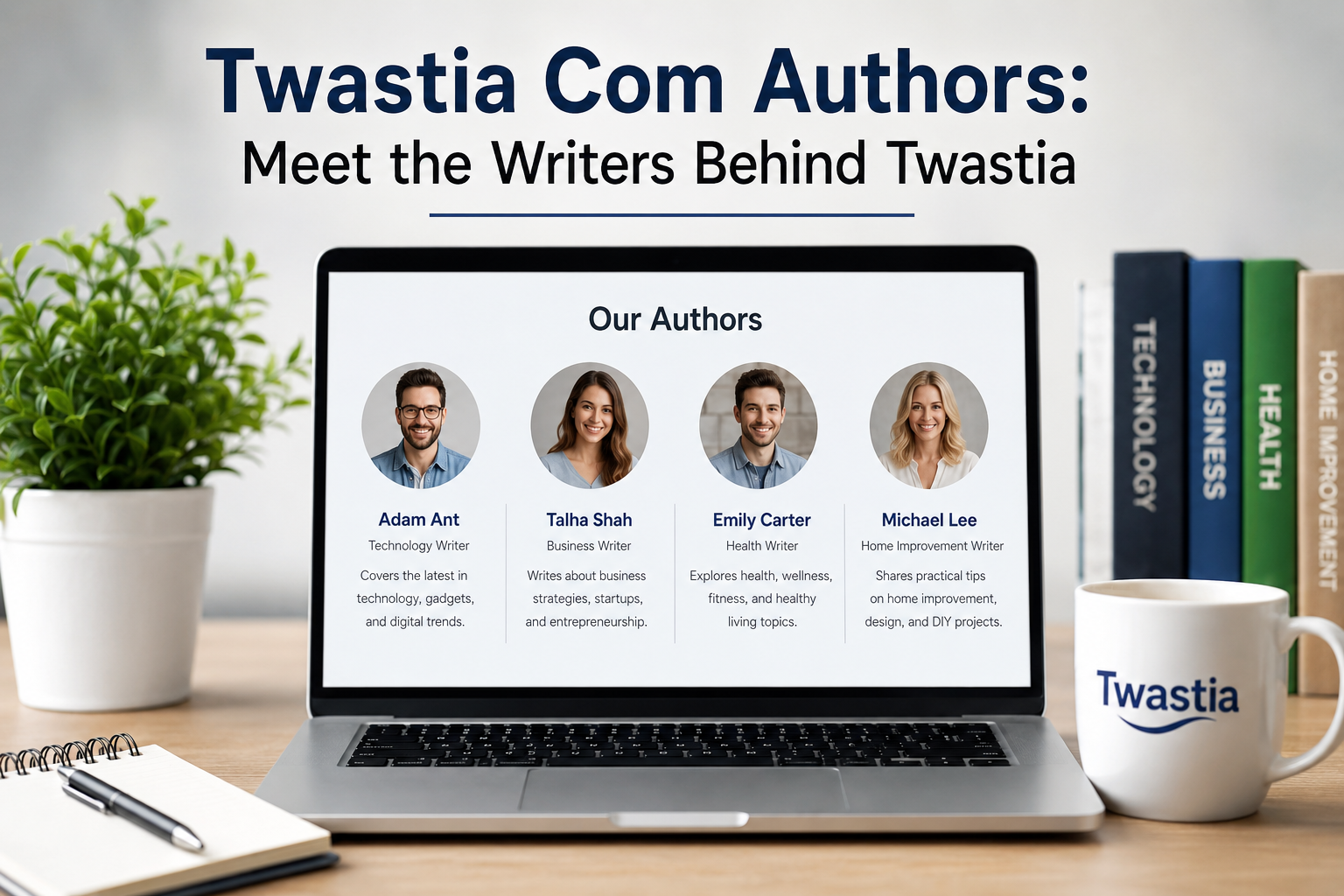
- Current Twastia articles display individual author bylines, including names such as Adam Ant on recent posts.
- Older Twastia content visible on the website includes bylines such as Talha Shah, showing that published contributors can vary by article and period.
- Twastia covers a wide range of subjects, so the relevance of an author’s experience depends on the topic being discussed.
- Readers should distinguish between a writer’s byline and verified subject-matter expertise.
- For important decisions, readers should compare information with authoritative sources and look for appropriate professional expertise.
Main Article
What Does “Twastia Com Authors” Mean?
The phrase twastia com authors generally refers to the writers, contributors, and editorial people responsible for articles published on Twastia.
Unlike a website focused on one narrow subject, Twastia publishes content across multiple categories. Its homepage currently displays articles related to areas such as technology, health, business, home improvement, finance, professional services, and other subjects.
Because the publication covers different topics, it is useful to look at the author information attached to the individual article rather than assuming that every writer has the same background.
An author page or byline can answer several practical questions:
- Who is credited with the article?
- What type of content does the writer produce?
- Is the article focused on a specialist topic?
- Does the author have relevant professional experience?
- Is the content editorial, informational, promotional, or contributed?
- Does the article provide enough information for readers to evaluate its reliability?
These questions are particularly important when an article discusses a subject where professional qualifications or first-hand experience make a meaningful difference.
Who Are the Twastia Com Authors?
There is not enough publicly available information to responsibly describe every Twastia contributor with a complete biography. The safest approach is therefore to distinguish between visible article bylines and verified professional profiles.
Twastia’s current site shows individual bylines on published posts. For example, several recent articles are attributed to Adam Ant, including posts published in July 2026.
The same site also contains older articles carrying different author names. For example, posts published in August 2025 include bylines attributed to Talha Shah.
This tells readers something important: the Twastia author pool is not necessarily represented by a single permanent writer. Byline information can vary depending on the article and publication period.
Why Individual Byline Information Matters
A byline provides accountability and context.
When an article has a named author, readers can distinguish it from completely anonymous content. However, a name alone should not be treated as proof of expertise.
For example, if an article discusses a technical subject, readers may reasonably want to know whether the writer has relevant technical experience. If an article discusses a medical topic, professional health expertise and appropriate source verification become much more important.
The best approach is to consider the author, subject, evidence, publication context, and purpose of the article together.
What Topics Do Twastia Writers Cover?
One of the defining characteristics of Twastia is its broad editorial scope.
The current website features content across numerous categories and subjects. Recent examples include technology, health, home improvement, business, professional services, finance, and Australian-focused topics.
Technology and Digital Topics
Twastia publishes technology-focused material covering subjects such as software, IT services, digital systems, and technology trends.
Technology content can be useful for readers who want straightforward explanations of unfamiliar concepts. However, technical topics can change quickly, so readers should pay attention to the publication date and determine whether the information still applies.
Business and Professional Services
Business-related articles can address areas such as entrepreneurship, professional services, workplace considerations, and business operations.
For this type of content, author expertise is only one part of the evaluation process. Readers should also consider whether the article explains its claims clearly and whether recommendations are appropriate for their particular situation.
Health and Wellness
Twastia also publishes health-related content.
Health information requires a higher level of care than ordinary lifestyle content. A general informational article should not automatically be interpreted as professional medical advice.
When a health article involves symptoms, diagnosis, medication, treatment, or a serious medical decision, readers should seek information from qualified healthcare professionals and authoritative medical sources.
Home Improvement
Home improvement is another area represented on the site. Topics can include maintenance, construction-related questions, household services, and practical property considerations.
Readers can often use this type of content as a starting point for understanding a problem, but complicated structural, electrical, plumbing, or safety issues may require advice from an appropriately qualified professional.
Finance and Money-Related Topics
Financial content can be useful for general education, but readers should be careful about applying general information to personal financial decisions.
Market conditions, regulations, taxes, and financial products can change. When money is at stake, current information and professional advice may be more appropriate than relying on a general blog article alone.
How to Evaluate a Twastia Author
Finding an author name is only the beginning. A better evaluation process considers several factors.
1. Check the Byline
Start by identifying who is credited with the article.
A clear byline makes it easier to understand who is responsible for the published content.
2. Look at the Subject
Consider whether the writer’s apparent role matches the subject.
A writer may be perfectly capable of explaining a general technology concept without being a professional engineer. Likewise, a general health writer should not automatically be treated as a doctor or medical specialist.
3. Check the Article’s Evidence
Strong informational content should explain important claims clearly.
Look for:
- Specific explanations
- Relevant examples
- Clear definitions
- Appropriate supporting information
- Reasonable limitations
- Current context where necessary
4. Check the Publication Date
A recent publication date does not automatically make an article better, but it can be important for subjects that change quickly.
Technology, regulations, financial conditions, software, and health guidance may require regular updates.
5. Consider the Purpose
Ask what the article is trying to accomplish.
Some articles are primarily educational. Others may introduce a service, explain an industry, or target a commercial search query.
Understanding the purpose helps readers interpret recommendations appropriately.
Author Expertise vs. Content Quality
A common mistake is to assume that a named author automatically makes an article authoritative.
That is not necessarily true.
A useful article should demonstrate quality through its content as well as its byline. Readers should look at the clarity of explanations, accuracy of information, relevance of examples, and transparency of the article’s purpose.
At the same time, an author biography can provide valuable context.
The strongest combination is:
| Factor | Why It Matters |
|---|---|
| Named author | Provides basic accountability |
| Relevant experience | Helps establish subject relevance |
| Clear explanations | Makes information easier to evaluate |
| Evidence | Supports important claims |
| Publication date | Helps determine freshness |
| Editorial transparency | Gives readers useful context |
| Appropriate sourcing | Strengthens trust in factual claims |
No single factor should be considered sufficient on its own.
Why Author Transparency Matters for Readers
Author transparency is increasingly important because online publishing has become extremely broad.
Readers encounter articles written by journalists, specialists, marketers, business owners, freelancers, contributors, and editorial teams. A byline helps provide context about where a piece of content comes from.
For a platform covering many subjects, this is especially useful.
Someone researching a general home improvement question may need practical guidance. Someone reading about a health issue may require professionally reviewed information. A reader researching a financial topic may need current regulatory or professional advice.
The same standard cannot be applied equally to every topic.
How to Read Twastia Content Responsibly
Readers can make better use of Twastia content by following a simple process.
Step 1: Identify the Main Question
Before reading, determine what you actually need to know.
Are you looking for a definition, an overview, practical tips, product information, industry context, or professional guidance?
Step 2: Check the Author
Look at the byline and any available author information.
Do not assume expertise that has not been established.
Step 3: Evaluate the Article
Ask whether the article actually answers the question.
Good content should provide useful information rather than simply repeating a keyword or making broad claims.
Step 4: Verify Important Information
For high-stakes subjects, verify important details using authoritative sources.
This is particularly important for:
- Medical decisions
- Legal matters
- Financial decisions
- Safety-related instructions
- Regulatory requirements
- Professional qualifications
Step 5: Check for Freshness
If the topic changes frequently, check the publication or update date and confirm that important information remains current.
What Makes a Strong Author Profile?
A strong author profile does not need to be unnecessarily long.
For a general content platform, useful author information might include:
- Full name
- Professional role
- Relevant experience
- Areas of subject expertise
- Previous publications
- Professional credentials when relevant
- Editorial responsibilities
- A short biography
The goal should be transparency rather than exaggerated authority.
An author profile is most useful when it gives readers enough information to understand why the writer is qualified to discuss a particular topic.
Should You Trust Twastia Com Authors?
There is no single answer that applies to every article.
The appropriate level of trust depends on the subject, author information, evidence, freshness, and intended use of the content.
For general informational topics, a well-written article can provide a useful starting point. For specialized or high-stakes subjects, readers should apply a higher standard.
A sensible approach is:
- Identify the author.
- Read the article critically.
- Check the publication date.
- Evaluate supporting information.
- Compare important claims with authoritative sources.
- Seek professional advice when appropriate.
This approach is more reliable than accepting or rejecting an entire publication based solely on its author list.
Why the “Twastia Com Authors” Search Matters
The search for twastia com authors reflects a broader shift in how readers evaluate online information.
People increasingly want to know not just what an article says but also:
- Who wrote it?
- Why was it written?
- What experience does the writer have?
- Is the information current?
- Can important claims be verified?
- Is the article educational or promotional?
These are useful questions for almost every online publication.
Author transparency can help readers make better decisions, but it should work alongside careful reading and source evaluation.
Frequently Asked Questions
Who are the Twastia com authors?
Twastia articles can carry different individual bylines depending on the content and publication period. Current pages show authors including Adam Ant, while older articles on the site include bylines such as Talha Shah.
Does Twastia have only one author?
No. Publicly visible Twastia content shows different author names across articles and publication periods. Readers should check the individual byline attached to the article they are reading.
What topics do Twastia authors write about?
Twastia covers a broad selection of subjects, including technology, health, business, home improvement, finance, professional services, and other informational topics.
How can I find the author of a Twastia article?
Look for the byline displayed with the article. The current website places author information alongside published content, making the credited writer identifiable on many posts.
Does having a named author guarantee that an article is accurate?
No. A byline provides useful transparency, but it does not by itself prove that every statement is accurate. Readers should also evaluate evidence, freshness, relevance, and the author’s relationship to the subject.
Should I rely on Twastia for medical or financial decisions?
General online articles can provide background information, but medical and financial decisions may require current, authoritative information and qualified professional guidance. High-stakes claims should be independently verified.
Why is author information important for SEO content?
Author information helps provide context and accountability. It can also help readers understand the perspective and experience behind an article, especially when the subject requires specialist knowledge.
Conclusion
Understanding twastia com authors is useful for anyone who wants to evaluate the content published on Twastia more carefully.
The site publishes material across a wide range of subjects, and publicly visible articles show different bylines across current and older content. Recent posts include authors such as Adam Ant, while older posts include names such as Talha Shah.
However, an author’s name should be treated as one part of a larger evaluation process. Readers should consider the writer’s relevance to the subject, the quality of the article, the freshness of the information, the evidence supporting important claims, and the purpose of the content.
For everyday informational searches, Twastia can serve as a starting point for exploring a topic. For specialized or high-stakes decisions, readers should go further by checking authoritative sources and consulting appropriately qualified professionals.
Ultimately, the most useful way to approach Twastia com authors is not simply to ask who wrote an article, but to understand who wrote it, what they are discussing, how the information is supported, and whether it meets the reader’s actual needs.






Leave a Reply