

Introduction
Searches for “lana condor nude” can lead users toward a mixture of celebrity photos, misleading headlines, edited images, fabricated claims, and content presented without reliable context. In an era when digital images can be copied, altered, or reposted within minutes, a search result alone is not evidence that an image is authentic.
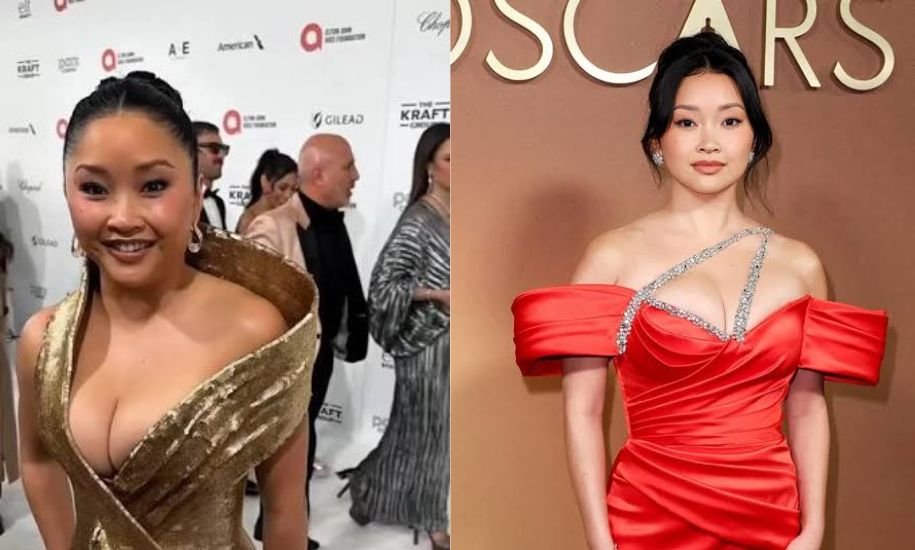
Lana Condor is an American actress and producer best known for her role as Lara Jean Covey in the To All the Boys film series. Like many public figures, she has appeared in thousands of legitimate photographs from premieres, interviews, professional photo shoots, television appearances, and social media.
The important question when encountering a supposed intimate or nude image is therefore not simply whether it appears online. The better question is: Can the image and the claim surrounding it be independently verified?
This guide explains how to approach searches involving Lana Condor nude images, identify common forms of online misinformation, evaluate questionable photographs, and distinguish verified public information from unsupported claims.
Key Takeaways
- A photograph appearing in search results does not automatically establish that it is authentic.
- Celebrity images can be cropped, edited, miscaptioned, recycled, or digitally manipulated.
- A trustworthy verification process considers the original source, context, publication history, and consistency with reputable reporting.
- Search snippets and social-media posts should not be treated as independent evidence.
- Avoid sharing unverified intimate imagery, particularly when the person’s consent and privacy are unclear.
- Reliable information should be separated from speculation, sensational headlines, and anonymous claims.
Biography Table
| Information | Details |
|---|---|
| Full Name | Lana Therese Condor |
| Date of Birth | May 11, 1997 |
| Age | 29 years old as of August 2026 |
| Birthplace | Cần Thơ, Vietnam |
| Nationality | American |
| Profession | Actress, producer |
| Education | California State Summer School for the Arts; Loyola Marymount University |
| Years Active | 2015–present |
| Known For | To All the Boys film series, X-Men: Apocalypse, Alita: Battle Angel |
| Major Achievements | International recognition for her acting career, particularly as Lara Jean Covey |
| Estimated Net Worth | Omitted because publicly reported estimates vary considerably and are not consistently verified |
Main Article
Why “Lana Condor Nude” Searches Can Be Misleading
Celebrity-name searches involving sensitive or intimate material often produce results that are difficult to interpret.
A search engine may index a page because the words appear somewhere on that page. That does not mean the page contains authentic evidence supporting the claim.
For example, a webpage may use Lana Condor’s name in a headline while displaying an unrelated photograph. Another page might take a legitimate red-carpet photograph and attach a misleading description to it. Social-media accounts can then repost the same claim, making it appear more credible simply because multiple pages repeat it.
Repetition is not verification.
This distinction is especially important when dealing with intimate-image claims involving a real person.
What Counts as Reliable Verification?
A responsible verification process looks beyond the image itself.
Several factors can help establish whether a claim deserves credibility.
1. Identify the Original Source
Start by asking where the photograph supposedly originated.
A professional publication, official interview, established news organization, or verified account provides a stronger starting point than an anonymous website or repost account.
If an image has no identifiable original source, that absence should increase skepticism rather than confidence.
2. Examine the Context
Authentic photographs normally have some surrounding context.
Ask:
- When was the image supposedly taken?
- Where was it taken?
- Who originally published it?
- Does the event or photo shoot actually exist?
- Do reputable sources describe the same event?
- Is the photograph consistent with other images from the same occasion?
A photograph stripped of its original caption can easily be given an entirely different meaning.
3. Look for Independent Confirmation
One website repeating another website’s claim is not independent confirmation.
Stronger verification involves unrelated, reputable sources that independently document the underlying event or photograph.
For celebrity imagery, legitimate photographs often appear across established entertainment publications, agency archives, event coverage, interviews, or official social accounts.
Common Types of Celebrity Image Misinformation
Online misinformation does not always involve sophisticated image manipulation. Some of the simplest techniques can be surprisingly effective.
Misleading Captions
A genuine photograph can be paired with a false caption.
For example, an ordinary promotional photograph might be described using a sensational claim that has no connection to the original image.
The photograph may be real while the claim attached to it is false.
Cropping
Cropping can remove important contextual information.
An image that originally showed a celebrity wearing a particular outfit may be cropped so that the remaining portion creates a different impression.
Cropping does not necessarily mean an image has been digitally manipulated, but it can still be used to mislead viewers.
Image Editing
Editing software can alter photographs in numerous ways.
Changes may include:
- Removing clothing or objects
- Adding visual elements
- Changing backgrounds
- Combining photographs
- Altering skin or body details
- Modifying facial features
- Creating composites from multiple sources
A technically convincing image is not automatically an authentic photograph.
Misidentification
Sometimes the person shown in an image is not the person named in the headline.
A photograph can be taken from another celebrity’s coverage and incorrectly associated with someone else. Once reposted repeatedly, the incorrect identification can become difficult to trace.
Old Images With New Claims
Another common technique involves taking an authentic older photograph and presenting it as something recent.
The image itself may be genuine, but the date, event, or circumstances described alongside it may be inaccurate.
Why Search Results Are Not Proof
Search engines organize information; they do not certify every claim appearing in search results.
A result can rank because a page is relevant to a particular query, not because its underlying claim has been independently proven.
This is particularly important for searches such as “lana condor nude.”
Search results can include:
- News articles
- Image galleries
- Social-media posts
- User-generated pages
- Archived content
- Reposted photographs
- Pages designed primarily to attract search traffic
The presence of an image thumbnail should therefore be treated as a starting point for investigation rather than definitive evidence.
How to Evaluate a Questionable Image
If you encounter an image that appears suspicious, use a structured process.
Step 1: Stop Before Sharing
Do not immediately repost the photograph or claim.
Sharing an unverified image can help misinformation spread further and can potentially contribute to privacy violations.
Step 2: Search for the Original Context
Look for the earliest identifiable publication or event associated with the image.
Compare captions, dates, locations, and surrounding photographs.
Step 3: Compare Multiple Sources
Look for independent reporting rather than pages that appear to copy one another.
If ten websites all use identical wording and the same photograph, they may ultimately trace back to one unsupported source.
Step 4: Check for Signs of Manipulation
Visual inconsistencies can sometimes indicate editing.
Potential warning signs include:
- Unnatural edges
- Inconsistent lighting
- Strange shadows
- Distorted anatomy
- Blurred or duplicated details
- Inconsistent skin texture
- Unusual reflections
- Different image quality between parts of the photograph
However, visual inspection alone cannot conclusively establish authenticity.
Step 5: Consider What Can Actually Be Proven
A responsible conclusion may sometimes be:
The claim cannot be independently verified.
That is more accurate than declaring an image genuine or fake without sufficient evidence.
The Difference Between a Real Photograph and a Real Claim
This distinction is often overlooked.
Suppose an authentic photograph of Lana Condor exists. Someone may later attach a false story to that photograph.
In that situation:
The photograph can be authentic while the claim is false.
The reverse can also happen. A real event might be described accurately, but a photograph attached to the story could be unrelated.
Reliable fact-checking therefore evaluates both the image and the claim surrounding it.
Why Context Matters for Celebrity Photography
Lana Condor has appeared publicly in many different settings throughout her career.
Her legitimate public photographs include professional portraits, movie premieres, award events, interviews, fashion appearances, promotional campaigns, and social-media content.
These different contexts naturally involve different clothing, styling, lighting, and photography techniques.
Consequently, unusual-looking imagery should not automatically be interpreted as evidence of a particular claim.
A photograph needs to be considered within its original setting.
Privacy and Responsible Sharing
Sensitive-image searches also raise an important issue beyond factual accuracy: privacy.
Even when someone is a public figure, being famous does not automatically make every image or claim about that person legitimate.
Before sharing intimate or allegedly intimate material, consider whether:
- The image is authentic.
- The person has publicly authorized its distribution.
- The original context is known.
- The accompanying claim is accurate.
- Sharing it could contribute to harassment or privacy violations.
When these questions cannot be answered confidently, the responsible choice is not to distribute the material.
How to Recognize Sensationalized Websites
Some websites use celebrity names and provocative keywords primarily to attract clicks.
Warning signs can include:
- Extremely sensational headlines
- Anonymous authorship
- No identifiable original source
- Repeated claims without evidence
- Images unrelated to the headline
- Excessive advertising
- Automatically generated-looking pages
- Claims that cannot be found in reputable reporting
- Language designed to create urgency rather than provide evidence
A credible article should explain where information comes from and distinguish established facts from uncertainty.
Why “Everyone Is Posting It” Is Not Evidence
Social proof can be particularly misleading online.
A claim may appear on dozens of accounts because one post was copied repeatedly. The number of reposts does not establish authenticity.
This creates a common misinformation cycle:
Original claim → repost → screenshot → additional reposts → search indexing → apparent widespread confirmation
At the end of that cycle, users may assume the claim must be true because they encounter it everywhere.
In reality, all of the copies may originate from the same unsupported source.
What Readers Should Do With Unverified Claims
When evidence is weak, the best approach is to classify the claim appropriately.
| Evidence | Appropriate conclusion |
| Confirmed original source and reliable context | Stronger basis for authenticity |
| Multiple independent reputable sources | Greater confidence |
| Anonymous website only | Treat cautiously |
| Social-media reposts only | Not sufficient verification |
| No identifiable source | Unverified |
| Clear signs of manipulation | Likely altered, but further evidence may be needed |
| Conflicting sources | Investigate before reaching a conclusion |
This approach avoids the two extremes of believing everything and dismissing everything.
How Searchers Can Protect Themselves From Misinformation
The same verification habits can be used for other celebrity-image searches.
Before accepting a sensitive claim, ask:
Who originally published it?
What evidence do they provide?
Can the event be independently confirmed?
Does the photograph match the claimed date and location?
Are reputable sources reporting the same thing?
Could the image have been edited or misidentified?
These questions take only a few minutes but can prevent the accidental spread of false information.
Frequently Asked Questions
Is there a verified Lana Condor nude photo?
Unverified images and claims circulating online should not be treated as authentic simply because they appear in search results or on multiple websites. Without a reliable original source and independent confirmation, such claims should be considered unverified.
Why do searches for Lana Condor nude produce so many results?
Search engines index pages based on their content and relevance to queries. Some pages may use celebrity names and sensitive keywords to attract visitors, even when their imagery or claims lack reliable context.
Can celebrity photos be digitally manipulated?
Yes. Images can be cropped, composited, retouched, altered, or otherwise manipulated. Visual inspection can reveal potential warning signs, but determining authenticity sometimes requires examining the original source and publication history.
How can I tell whether a celebrity image is authentic?
Find the earliest credible source, examine the original context, compare independent coverage, check the date and location, and look for inconsistencies in the image. Avoid relying solely on reposts or anonymous websites.
Does appearing in search results mean an image is real?
No. Search indexing does not constitute authentication. A search engine can return pages containing unverified, misleading, or inaccurate information.
Should I share an unverified intimate image?
No. Sharing unverified intimate imagery can spread misinformation and may contribute to privacy violations. It is better to establish the image’s authenticity and context before discussing or distributing it.
What is the biggest warning sign of an unreliable celebrity-image claim?
A lack of an identifiable original source is one of the strongest warning signs. Sensational headlines, anonymous pages, copied wording, and unsupported assertions are additional reasons to be cautious.
Can an authentic photograph be used to support a false claim?
Yes. A legitimate photograph can be taken out of context, cropped, misidentified, or paired with an inaccurate caption. Authenticity of the image and accuracy of the surrounding claim must therefore be evaluated separately.
Conclusion
Searches for “lana condor nude” illustrate a broader problem with online celebrity-image misinformation: seeing an image is not the same as verifying it.
The most reliable approach is to investigate the original source, establish the photograph’s context, compare independent information, and remain cautious when evidence is incomplete. A copied headline, social-media post, or search-result thumbnail should never be treated as conclusive proof on its own.
For readers, the goal should not be to find the most sensational result. It should be to determine what can actually be established from credible evidence.
When an intimate-image claim cannot be independently verified, the most accurate conclusion is simply that it remains unverified. That standard protects both the quality of information and the privacy of the people involved.


Leave a Reply